
Are you struggling to come to terms with your breastfeeding journey?
You’re not alone in feeling this way. We understand what it’s like to feel a failure for not being able to feed your baby the way you wanted to, to feel traumatised by what you’ve been through, and let down by the support you received. We are here to support you.

Are you struggling to come to terms with your breastfeeding journey?
You’re not alone in feeling this way. We understand what it’s like to feel a failure for not being able to feed your baby the way you wanted to, to feel traumatised by what you’ve been through, and let down by the support you received. We are here to support you.
Welcome to Breastfeeding Psychology
We know that when breastfeeding doesn't go to plan, it can be really difficult to come to terms with emotionally. It may have come as a surprise to you that you feel so strongly, or perhaps you always knew that breastfeeding was important to you. Either way, adjusting to feeding not going to plan can be a real challenge for your mental health and wellbeing. And for some, what you went through along the way was traumatising and has left you bruised.
We understand how hard it can be when you can’t feed your baby the way you want to, and we are here to support you with processing this so you can move forwards.
We also love working with mums where breastfeeding is going well, but you are struggling with your mental health, and want to see a psychologist who understands your breastfeeding context, and isn’t going to suggest weaning as an easy answer.
Our team of experienced Clinical Psychologists and therapists are passionate and committed to helping you to feel better and more yourself again.

Phoebe’s Story
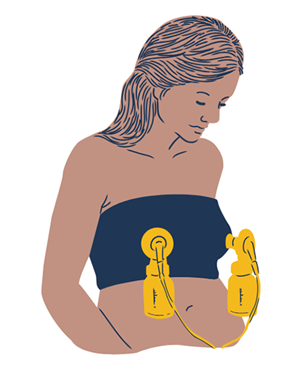
Phoebe was a first-time mum. She had wanted to breastfeed, but it was painful from the start. She was told that the latch looked “great” and her pain and concerns were dismissed . Her baby lost “too much” weight and she was advised to start pumping and formula top-ups.
The pain didn’t improve and so Phoebe started using nipple shields. Eventually a tongue tie was discovered and released, but by 6 weeks, Phoebe was understandably exhausted and relieved to swap to formula. Looking back, she feels she was unheard and let-down by professionals, and that she failed at feeding her baby, or advocating for him well enough.
Phoebe still feels upset when she sees other mums breastfeeding, and worries that she is judged for bottle feeding. She can’t really bear to remember the intensity of those first few weeks, and also can’t seem to forget it and move on. Sometimes when she sees photos of her baby as a newborn, strong memories flood back and it’s like she is right back in it again. Her husband and family don’t understand and are quite dismissive of her feelings. She worries that she hasn’t given her baby what he needs, both with milk, and with being so distressed and preoccupied.
Phoebe comes to us and we understand what she has been through. We understand that while she made the best decisions she could at the time, she is deeply grieving how she wanted to feed her baby, and her start to motherhood. We know that the pain and lack of support she received are traumatic, and we use CBT together to process her memories so that they are less overwhelming and distressing.
We help her to feel more compassionately to herself, and to focus on what is important to her about being a mum. We help her to consider what changes she needs to make to improve her wellbeing, and how to navigate challenging social situations. We are here to listen and provide evidence-based psychological treatment.
Jenny’s Story
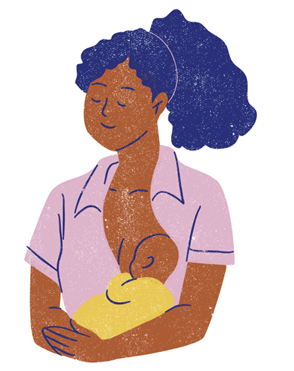
Jenny was a mum of two. She was still feeding her 3 year old at bedtime and through the night. She was feeling low and depressed (and feeling guilty for feeling this way!) and also worrying about lots of different things all the time.
She had always thought she had quite low self-esteem, but since having children she was more overwhelmed and not able to do the things that usually helped her mood. There also seemed no end to the things that she felt she “wasn’t doing a good job of”, and as though she was letting everyone down no matter what she tried to do.
On top of all this, she worried that if she sought help they would think she was either “weird” for feeding a 3 year old, or advise her to wean her toddler in order for her to feel better.
We understood Jenny’s situation, and are supportive of natural-term breastfeeding. We helped Jenny to develop a psychological map of her longstanding low self-esteem. We worked together to understand her patterns of low mood and anxiety, and used CBT techniques to help Jenny to improve her mood, and be more skilled in handling anxiety when it came up. We didn’t blame her problems on breastfeeding, or consider weaning as an easy fix.
Jenny also shared that she still felt troubled by some traumatic memories from the birth of her youngest child, and that this meant she didn’t feel able to plan a third child, despite desperately wanting to grow her family. We used EMDR to process the traumatic memories associated with this birth, and this took a lot of the power of these memories away, so Jenny was able to think and feel more clearly about considering a third child. She was now able to really believe and feel that what happened during birth wasn’t her fault, and didn’t mean that she was weak.